
There are very few brands in the world where you can say the name and everyone immediately knows what you’re talking about. Rolex is one of them.
Even if someone has never owned a luxury watch, chances are they know what a Rolex is. It’s become shorthand for quality, success, and reliability – and not just within watch circles, but far beyond them.
What’s interesting is that Rolex didn’t get there by accident. It wasn’t one big moment or a clever marketing campaign. It was built over time, through consistency, with smart decisions, and a very clear understanding of what people actually want from a watch.
Most people would assume that Rolex was founded in Switzerland, but actually Rolex was founded in 1905 by Hans Wilsdorf in London, before later moving operations to Switzerland. From early on, the focus was simple: make wristwatches that were both accurate and reliable.
That might not sound revolutionary now, but at the time it was. Wristwatches weren’t always taken seriously, in a time where pocket watches were still all the rage, and Rolex played a big part in changing that perception.
They pushed accuracy standards, secured some of the first chronometer certifications, and introduced practical innovations like the Oyster case, which is a sealed and waterproof design that made watches far more usable in everyday life.
What stands out looking back isn’t just the inventions themselves, but the direction. Everything Rolex did was about making watches better to wear, not just better to look at. That mindset still runs through the brand today.
Rolex didn’t grow by chasing trends. In many ways, they’ve done the opposite.
They’ve stuck to a core range of designs and refined them over decades. The Submariner, the Daytona, the GMT-Master aren’t new ideas. They’ve just been improved slowly, carefully, and without losing what made them work in the first place.
That consistency has built trust. People know what they’re getting with a Rolex. It’s not unpredictable, it’s not risky, it just works.
There’s also something to be said for how Rolex positions itself. You’ll see the watches in sport, exploration, and everyday life but not in a forced way, just naturally present. Over time, that builds a kind of quiet credibility.
And then there’s demand. Rolex produces a lot of watches (rumoured to be around 1 million or so for worldwide distribution each year), but not enough to satisfy the demand for them. That gap has created a level of desirability that very few brands can match.
The result is a watch that isn’t just respected, it’s wanted.
While Rolex has a wide range, a few key models do most of the talking.
If you had to pick one watch that sums up Rolex, the Submariner would be high on the list. Clean, simple, and incredibly well balanced, it’s a dive watch that works just as well with a suit as it does on the beach (or indeed in the water if you so choose).
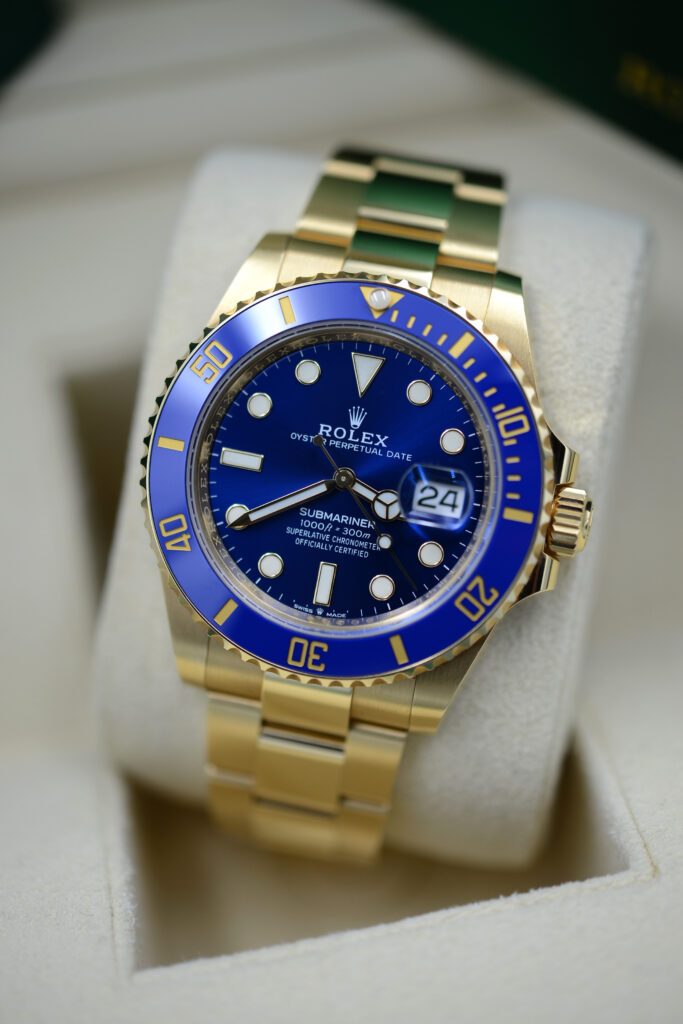
The Rolex Submariner been around since the 1950s, and the core design hasn’t really changed, because it didn’t need to. It’s one of those rare pieces where everything just feels right.
The Daytona sits in a slightly different space. More focused, more purposeful, and harder to get hold of.
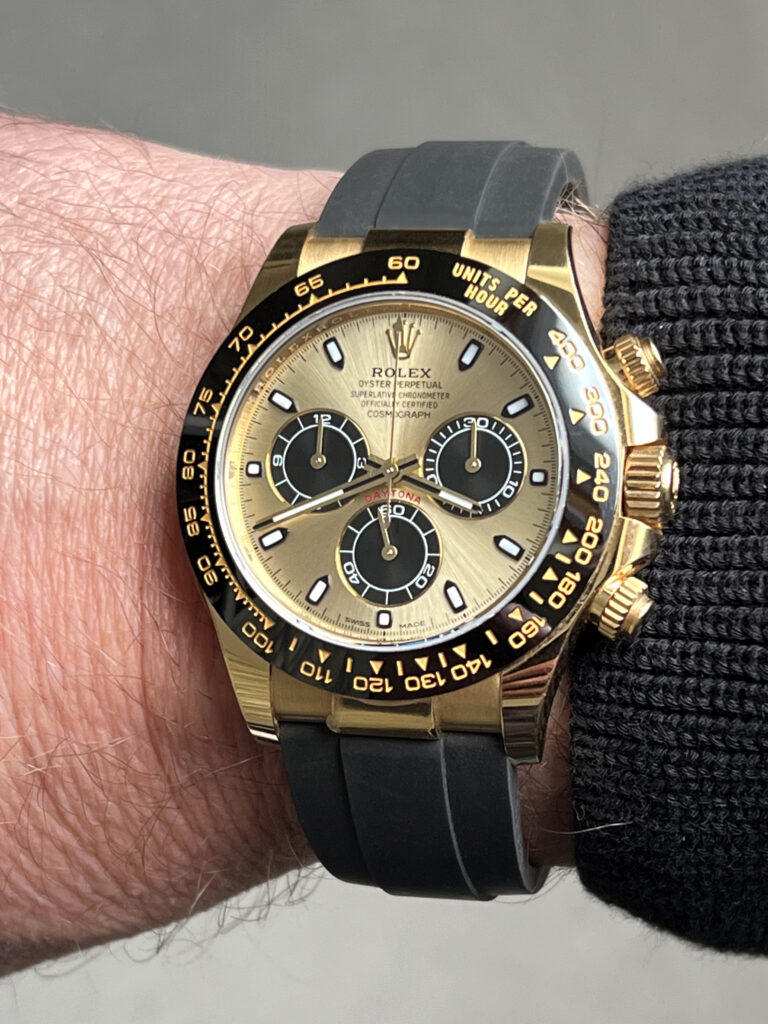
Originally designed as a racing chronograph, it’s now one of the most in-demand watches in the world. The appeal comes from a mix of design and scarcity. It’s sporty but still refined enough to wear day to day.
For many collectors, it’s a watch that marks a step up.
The GMT-Master II is one of the most practical watches Rolex makes. The ability to track multiple time zones makes it ideal for travel, but even if you never leave your time zone, it’s still a very wearable piece.
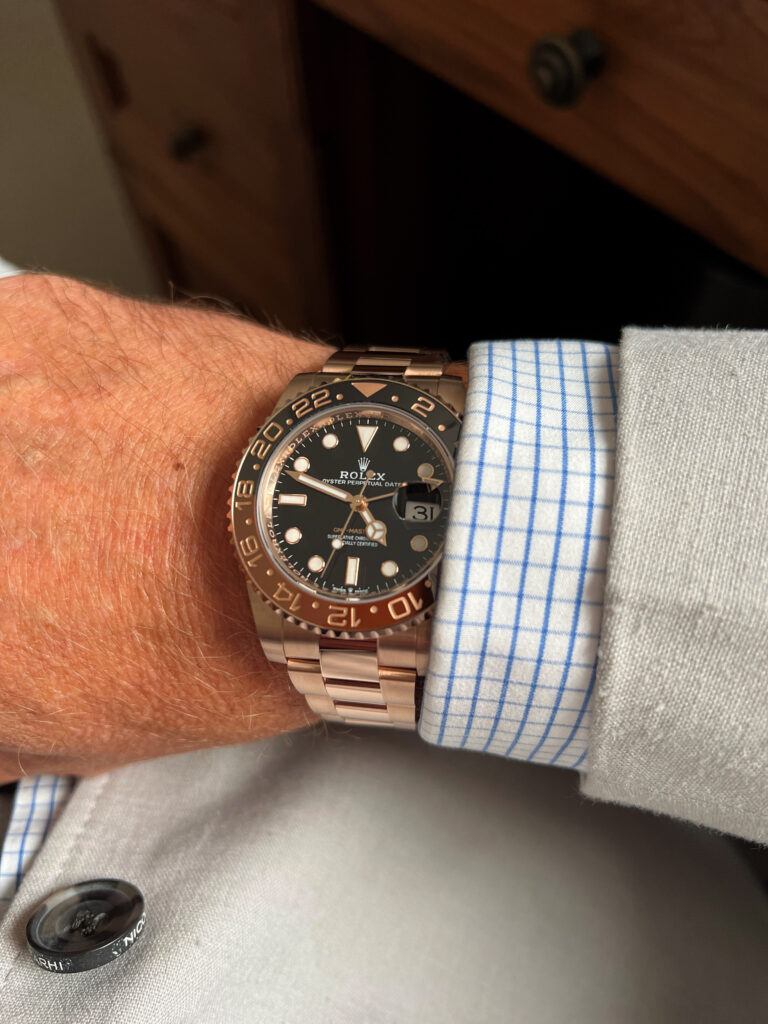
The different bezel colour combinations have also given it a strong identity. It’s functional, but with just enough personality to stand out.
There isn’t just one reason people buy Rolex. It’s a combination of things that, together, are hard to beat.
First, reliability. These are watches you can wear every day without worrying about them. They’re built properly, and they hold up. Yes they will accumulate scratches, as any watch would, but that just shows the watch itself has lived and has a story to tell.
Second, design. Rolex doesn’t reinvent itself every year. The designs are familiar, and that’s part of the appeal. You know it will still look right in ten, twenty or fifty years’ time. The longevity of Rolex appeal is clear to see. Vintage Rolex watches are still every bit in demand today.
Then there’s value. Rolex watches tend to hold their price better than most other luxury watches, and in some cases, they increase. That’s not the reason to buy one, but it certainly doesn’t hurt.
And finally, recognition. Whether that matters to you or not, it’s there. A Rolex is understood. It carries weight.
Rolex sits in a very strong position. It’s not the most complicated watchmaker, and it doesn’t try to be. Brands like Patek Philippe or Audemars Piguet operate at a different level when it comes to high complications and finishing.
But that’s not really the point. Rolex focuses on something else - making watches that people actually wear, every day, in the real world.
Compared to brands like Omega or Tudor, Rolex tends to sit a step above in terms of demand and market strength. It’s the brand people often move towards once they’ve spent some time around watches.
It’s also one of the few brands that works equally well for a first-time buyer and a seasoned collector. That’s not easy to achieve.
At The Watch Room, Rolex is by far our best-selling brand.
That’s not because we push it harder than anything else. It’s because it’s what people consistently ask for. Whether it’s someone buying their first luxury watch or adding to an existing collection, Rolex comes up again and again.
We’ve worked with these watches for years, and the pattern is always the same. People buy one, wear it constantly, and then come back for another.
There’s a level of trust in the brand that’s hard to replicate. And from our side, it’s one of the easiest brands to stand behind.
Rolex has managed to do something very few brands ever achieve. It’s built a reputation that goes beyond its product, while still delivering watches that live up to it.
They haven’t chased trends or tried to reinvent themselves every few years. They’ve focused on making good watches, refining them over time, and letting that consistency do the work.
That’s why Rolex continues to sit where it does today. Not just as a luxury watch brand, but as the one many people measure everything else against.
And whether you’re just starting out or already deep into collecting, it’s hard to argue with that.
Rolex watches aren’t cheap, but there’s a reason for that. The materials are high quality, the movements are reliable, and the whole watch is built to last. On top of that, demand is consistently higher than supply, which keeps prices strong. You’re not just paying for the name, you’re paying for something that’s been made properly and holds up over time.
In many cases, yes. Rolex watches tend to hold their value better than most other luxury brands, and some models increase in price over time. That’s not guaranteed, and it shouldn’t be the only reason to buy one, but it does give a level of reassurance that’s hard to ignore.
The Submariner, Daytona, and GMT-Master II are some of the most in-demand models. Each one offers something slightly different - from diving capability to chronograph functions to multiple time zones - but all share the same core strengths: reliability, design, and long-term appeal.
For many people, it is. Rolex is easy to wear, easy to understand, and holds its place well over time. It can be the starting point for a luxury watch collection, but just as often, it’s the brand people come back to.

